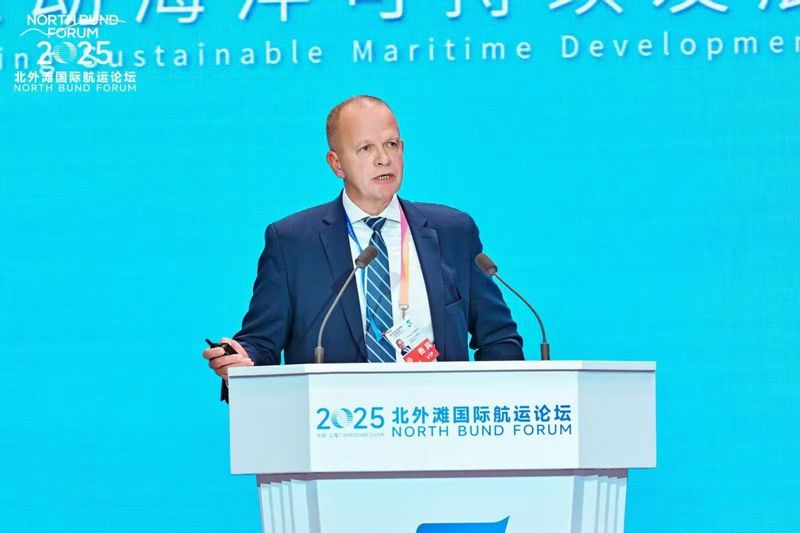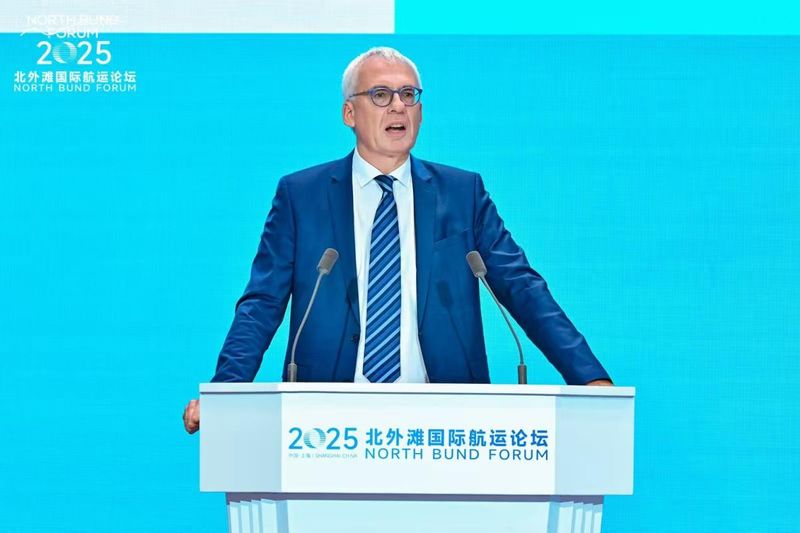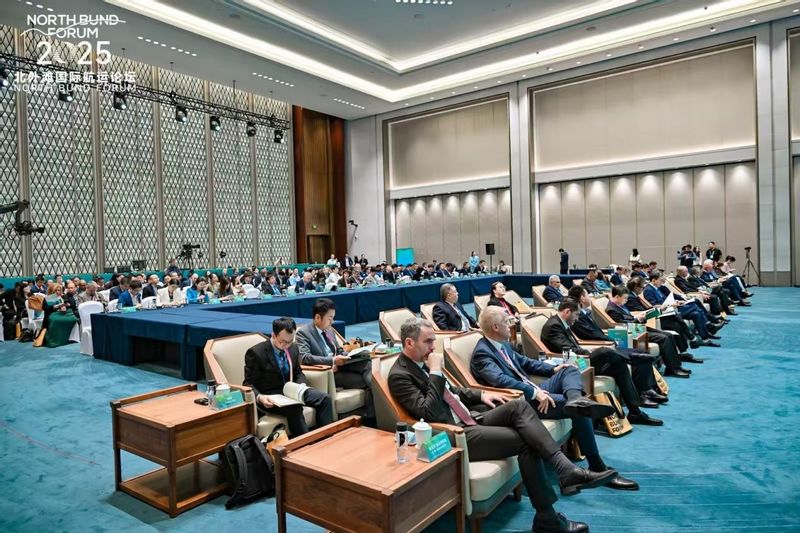
From October 19 to 21, the 2025 North Bund International Shipping Forum, co-hosted by the Ministry of Transport of China and the Shanghai Municipal People’s Government, was held at the Grand Halls in Shanghai. This year’s forum theme was “Collaborating for Sustainable Global Shipping & Aviation.” It featured an Opening Ceremony and International Green Shipping & Aviation Main Forum, two thematic forums, four sub-forums, and over 10 special events. Among these, the “Roundtable Discussion on the Green Development of Global Shipping” was jointly organized by Shanghai Maritime University (SMU), the Maritime Technology Cooperation Centre for Asia (MTCC Asia), and the China Ports and Harbours Association. Themed “Embracing Green Shipping, Promoting Sustainable Maritime Development,” the salon covered key green shipping development topics such as “IMO Mid-Term GHG Reduction Measures,” “Alternative Fuels and New Technologies for Shipping Emission Reduction,” and “Green Shipping Talent.” It attracted over 200 representatives from government departments, international organizations, shipping enterprises, and academic institutions across multiple countries and regions. The roundtable salon was chaired by Vice President Yin Ming.
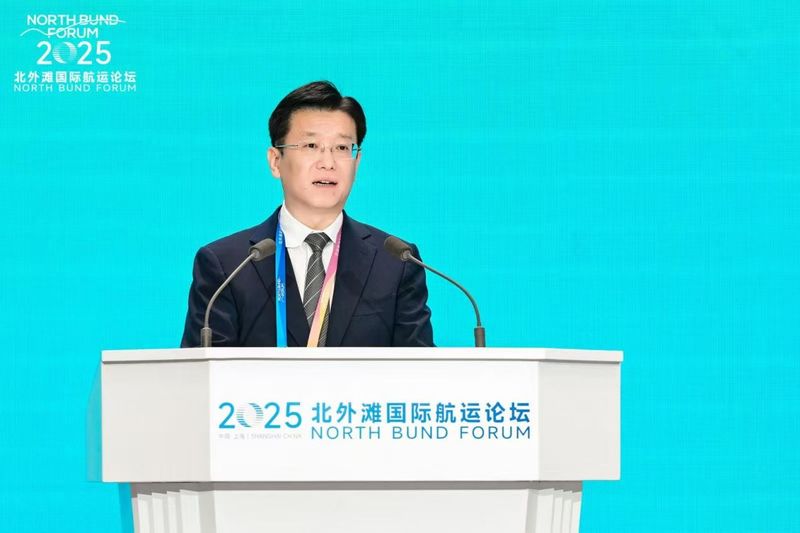
Chairman of the Shanghai Maritime University Council Song Baoru attended the Opening Ceremony and International Green Shipping & Aviation Main Forum on the morning of October 19. He took the stage to launch the “Cooperation Project for Jointly Cultivating High-Level Maritime Talent,” initiated by Shanghai Maritime University and the Hong Kong Shipowners Association. The project aims to promote the integrated development of maritime education and industry, focusing on building a virtuous ecosystem integrating “industry, academia, research, and application.” By establishing a network of industry-academia-research bases and an open platform for sharing maritime education resources, it fosters collaboration between academia and industry, builds a solid talent foundation for the sustainable development of the maritime sector, and contributes to cultivating and developing new quality productive forces in the transportation field.
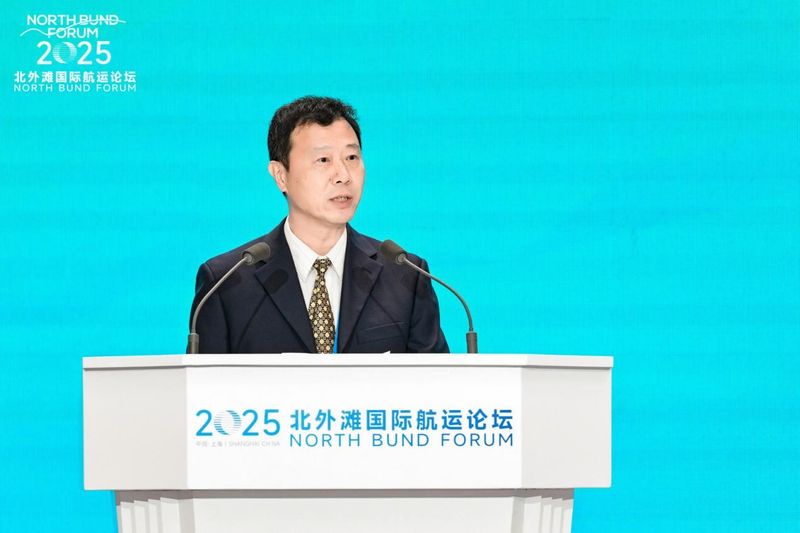
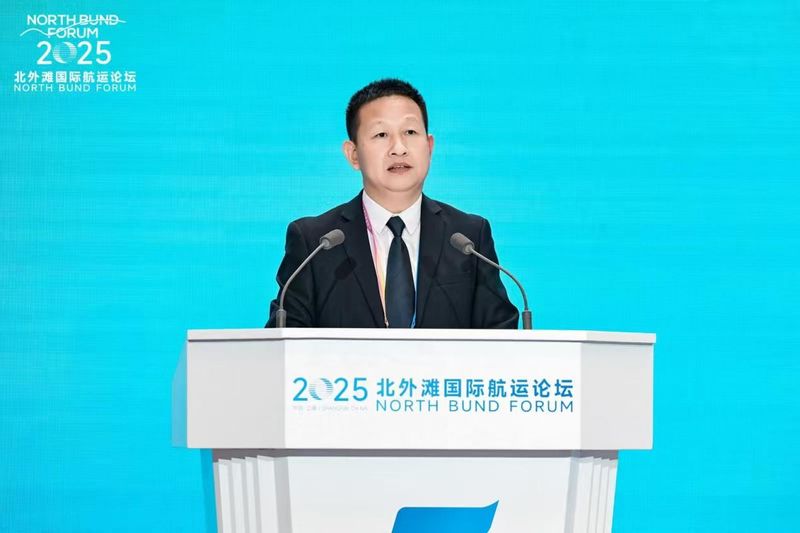
President Chu Beiping attended and delivered a speech at the roundtable salon. He pointed out that global shipping urgently needs breakthroughs in several key areas, including implementing the IMO’s mid-term greenhouse gas reduction measures, accelerating smart port development, constructing green shipping corridors, promoting clean energy technology innovation, and strengthening professional talent cultivation. He highlighted SMU’s specific initiatives in exploring green shipping solutions, innovating maritime education models, and optimizing talent cultivation mechanisms. He called for mobilizing the entire industrial chain to work collaboratively in advancing shipping decarbonization.
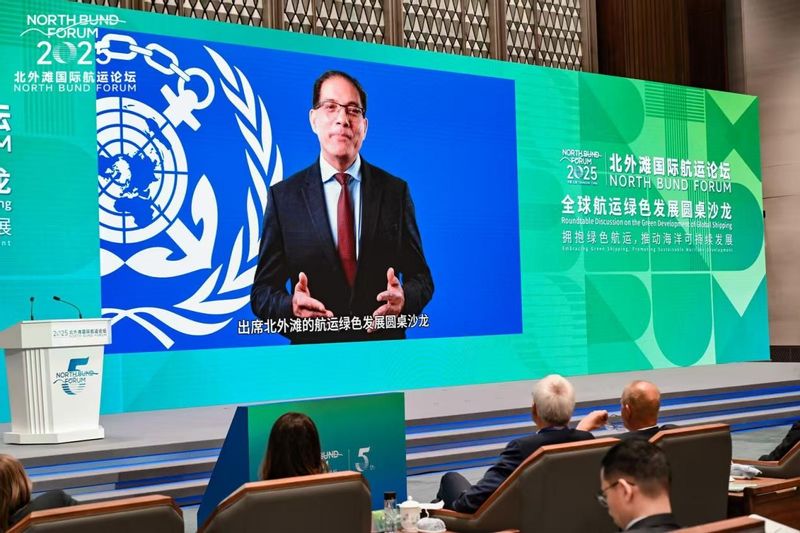
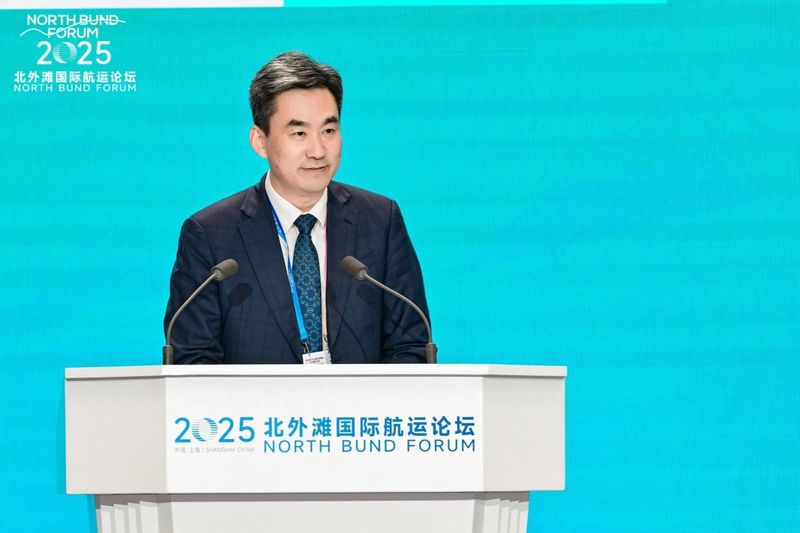
During the leadership addresses at the salon, Yue Guoyong, Director General of the International Department of the Ministry of Transport, stated that China is systematically enhancing its green fuel supply capacity through policy coordination. He launched three initiatives: “Co-building an open and inclusive green shipping ecosystem,” “Stimulating data-driven digital and intelligent innovation momentum,” and “Constructing a mutually beneficial and win-win new international shipping order.” Ye Xing, Deputy Director General of the Shanghai Municipal Transport Commission, shared Shanghai’s practices, stating that Shanghai is comprehensively advancing its green transformation from four dimensions: ports, industry, services, and cooperation, offering a “Shanghai Solution” for the global shipping industry. Jose Matheickal, Director of the Technical Cooperation and Implementation Division of the International Maritime Organization (IMO), delivered a video message calling for strengthened international collaboration to advance “green corridors” from concept to implementation, enhance technical cooperation with developing countries, and jointly reduce the costs of green transition to help the shipping industry achieve its 2050 net-zero emission target.
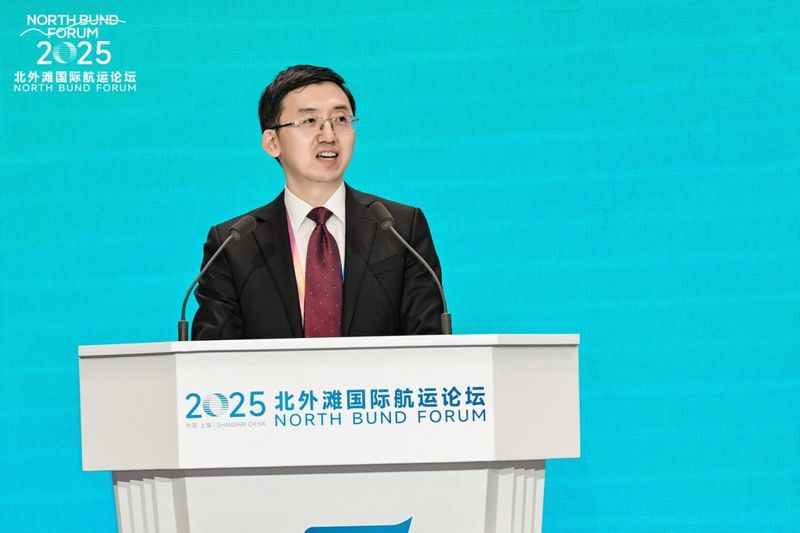
During the expert presentations session, Fan Yonghui, Deputy Director-General of the Maritime Safety Administration of the Ministry of Transport, elaborated on China’s green transition strategy for the shipping industry. He emphasized that China is systematically advancing shipping decarbonization by strengthening coordination, improving safeguards, and deepening international cooperation. He called for global consensus within the shipping community to build an open and win-win green shipping ecosystem. Andreas Nordseth, Senior Executive Adviser to the EU SCOPE TA Project and Former Director General of Danish Maritime Authority, emphasized the need for a holistic perspective to promote synergy across all areas of shipping and jointly advance green shipping development. Luc Arnouts, Vice President International Relations and Network of the Port of Antwerp-Bruges, shared practices in port green energy application and technology, calling for enhanced cooperation among global ports to jointly contribute to decarbonization in the shipping sector.
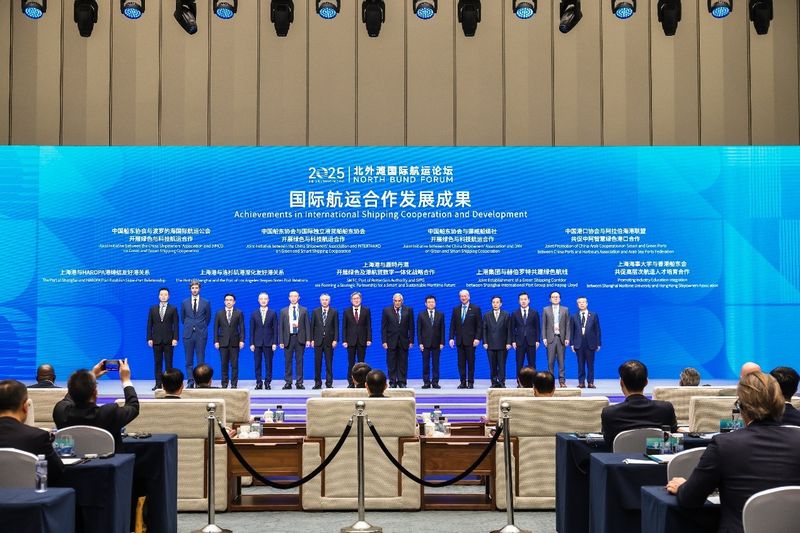
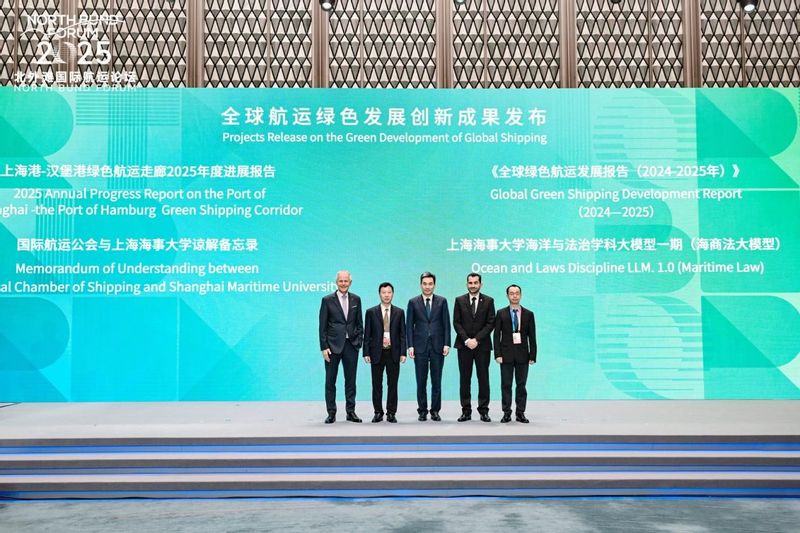
In the outcome release session, President Chu Beiping, together with Ye Xing (Deputy Director General of the Shanghai Municipal Transport Commission), Jens Meier (CEO of the Hamburg Port Authority), Thomas Kazakos (Secretary General of the International Chamber of Shipping), and Yang Hui (Vice President of Tencent Cloud Education), jointly released five significant outcomes. These included the “Ocean and Laws Discipline LLM.1.0 (Maritime Law),” the “2025 Annual Progress Report on the Port of Shanghai-Los Angeles/Long Beach Ports Green Shipping Corridor,” the “Global Green Shipping Development Report (2024-2025),” the “2025 Annual Progress Report on the Port of Shanghai-the Port of Hamburg Green Shipping corridor,” and Memorandum of Understanding between International Chamber of Shipping and Shanghai Maritime University. These outcomes signify that green shipping practices are moving from concepts to substantive implementation, offering demonstrative pathways and models for the green transformation of the global shipping industry.
During the North Bund Forum, Vice Presidents Li Zhipeng, Shi Xin, and Yan Wei participated in forums such as the “North Bund International Shipping Forum,” “Maritime Traffic Safety Forum,” “Finance and Insurance Forum,” and “Digitalization and Intelligentization Forum,” contributing university wisdom to the green and sustainable development of global shipping.
This participation in the forum is an important practice for Shanghai Maritime University to serve the national “Dual Carbon Strategy” and enhance the capacity of Shanghai International Shipping Center. Looking ahead, the university will continue to leverage its disciplinary advantages, deepen international collaborative integration of “government, industry, academia, research, and application,” and provide solid technical support and reliable talent assurance for achieving high-quality development in the global shipping industry.