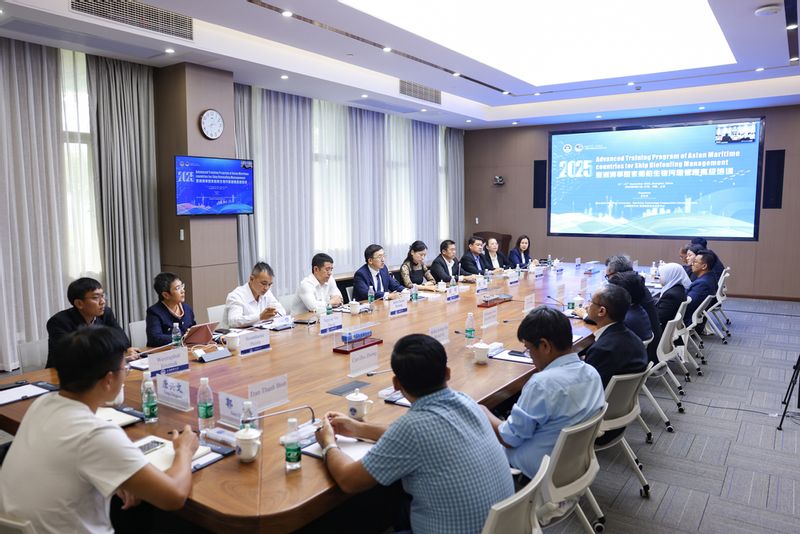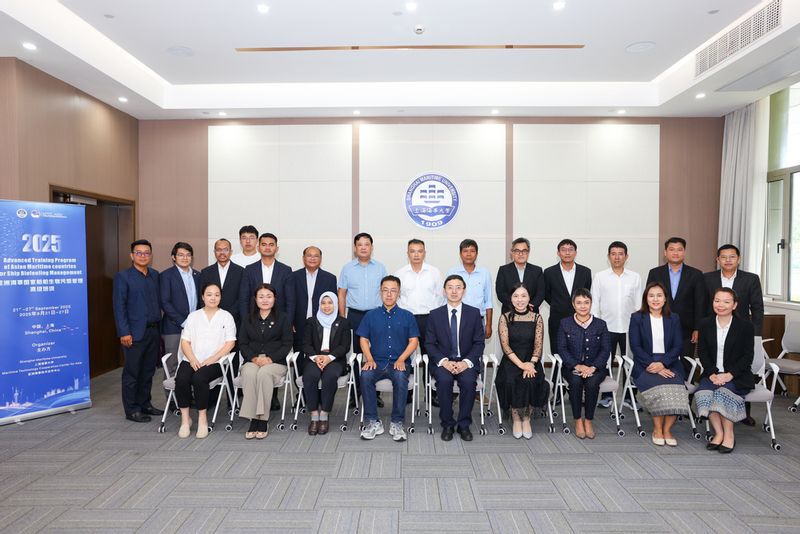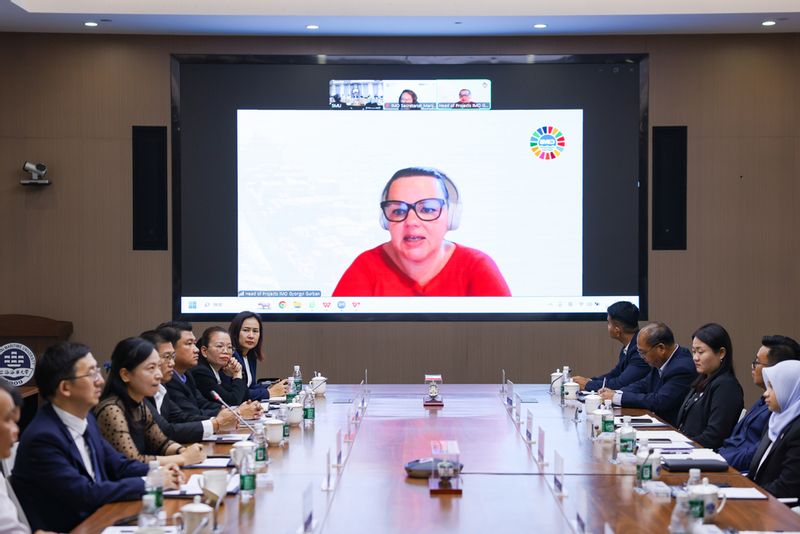
On September 22, the opening ceremony of the 2025 Advanced Training Program of Asian Maritime Countries for Ship Biofouling Management was held at Shanghai Maritime University. Twenty maritime officials from six countries — China, Cambodia, Laos, Malaysia, Thailand, and Vietnam — attended the event. Vice President Yin Ming of Shanghai Maritime University delivered a speech, and officials from the International Education College presided over the ceremony.
In his remarks, Yin Ming expressed gratitude for the strong support and active participation of maritime agencies from all participating countries. He emphasized that as key players in the global shipping industry, Asian nations bear a vital responsibility in promoting sustainable shipping practices and protecting marine ecosystems. Biofouling, he noted, not only serves as a major pathway for invasive species but also directly affects vessel energy efficiency and global carbon emissions. He pointed out that this training program represents a concrete step in implementing IMO technical standards and strengthening regional cooperation in environmental governance.
Ms. Gyorgyi Gurban, Head of Projects Implementation in the IMO Department of Projects and Partnerships, delivered a video address. She stated, “Since the first IMO Biofouling Guidelines in 2011, global standards for biofouling prevention have continued to evolve. The release of the updated 2023 Guidelines marks significant progress toward establishing binding international requirements. This training program is not only a milestone in Asian maritime cooperation but also a key catalyst for driving the industry’s green transition.”
The one-week training will focus on international standards, prevention technologies, and regulatory practices for ship biofouling management. Participants will engage in systematic learning on cutting-edge antifouling technologies and share national experiences through case studies and discussions. The program aims to build a regional cooperation network for marine biofouling prevention in Asia, providing both technical support and human resource development to tackle the growing challenge of marine biological invasions.