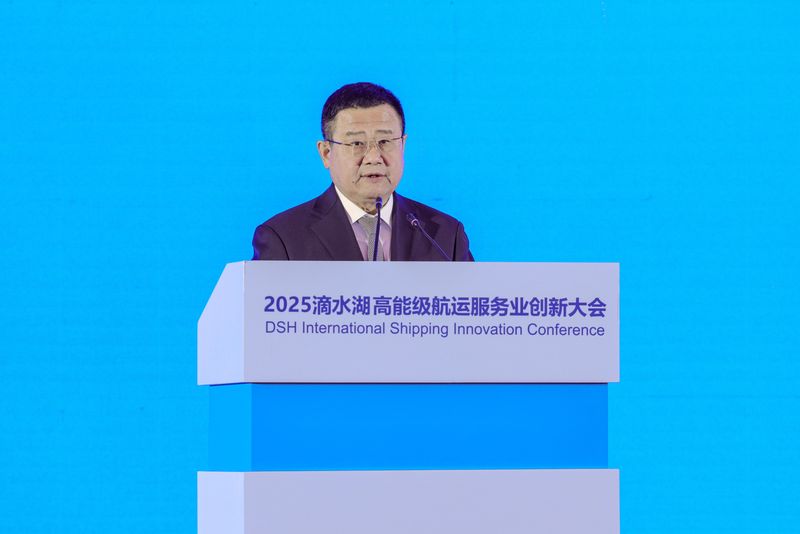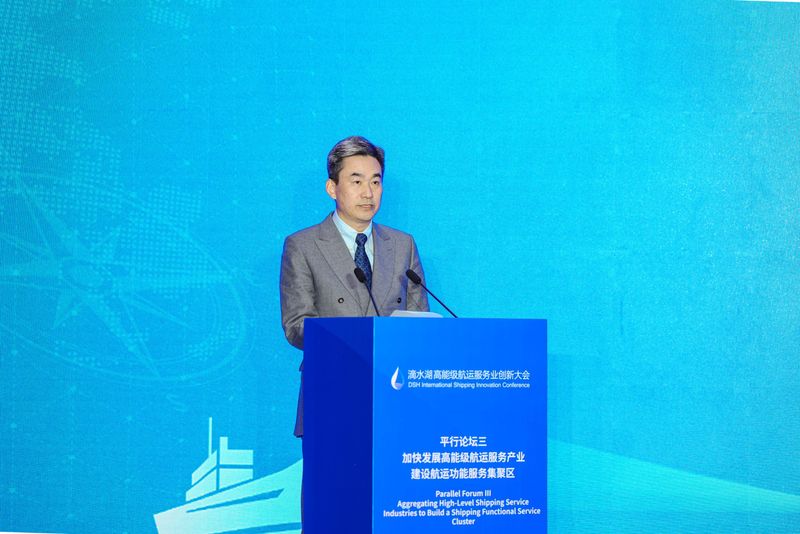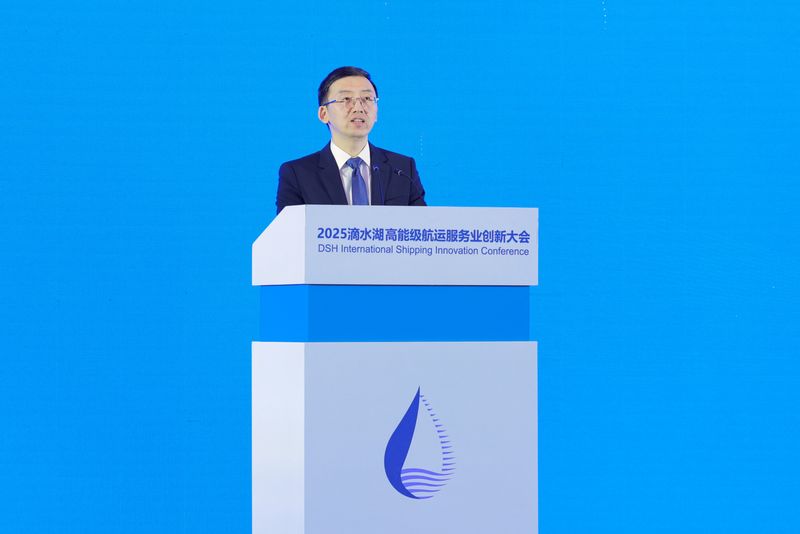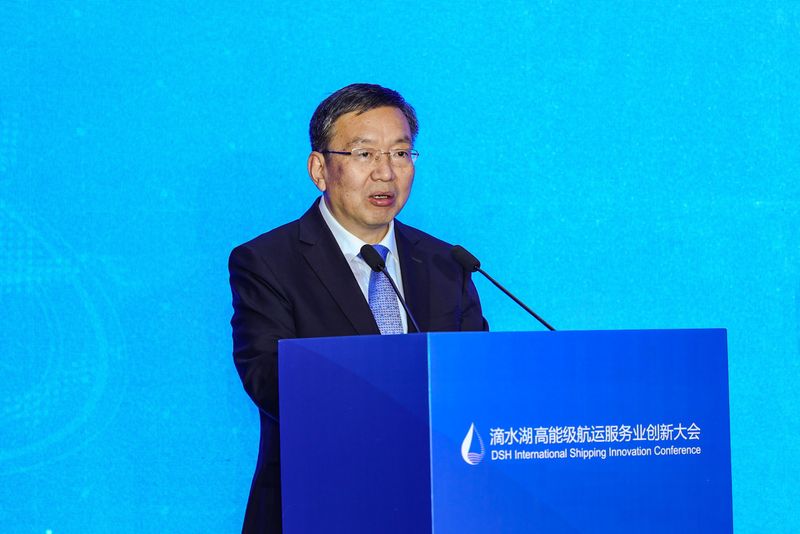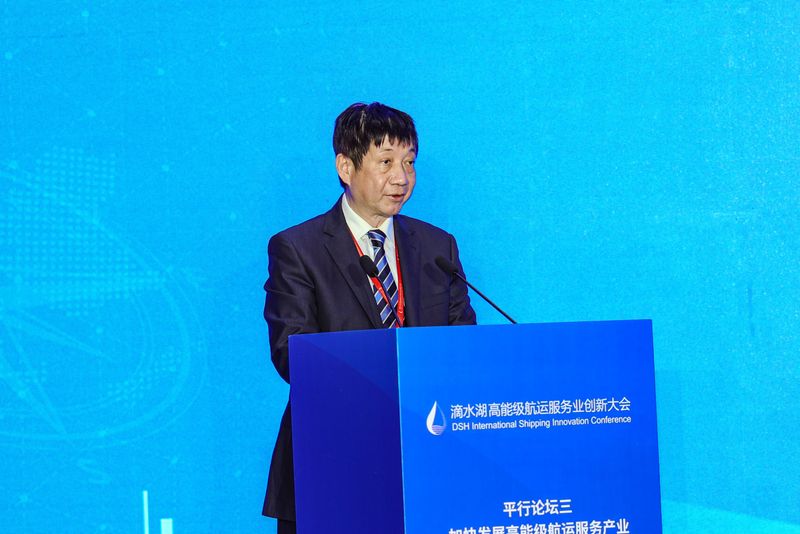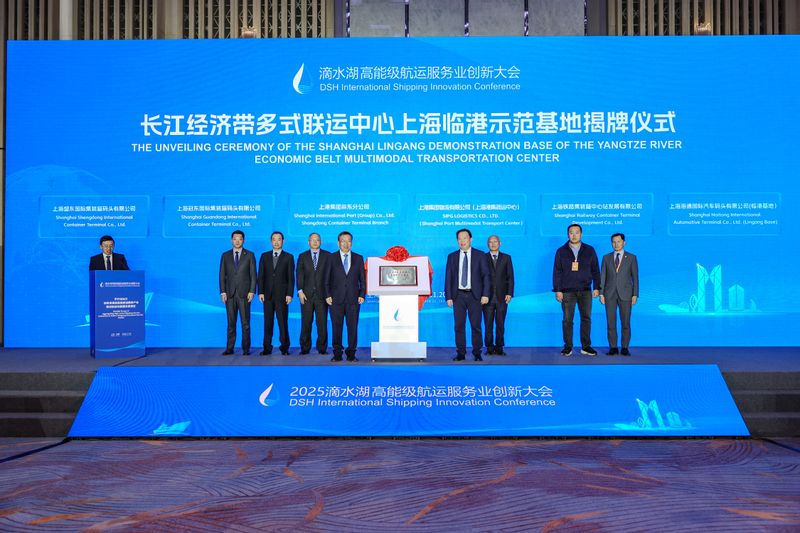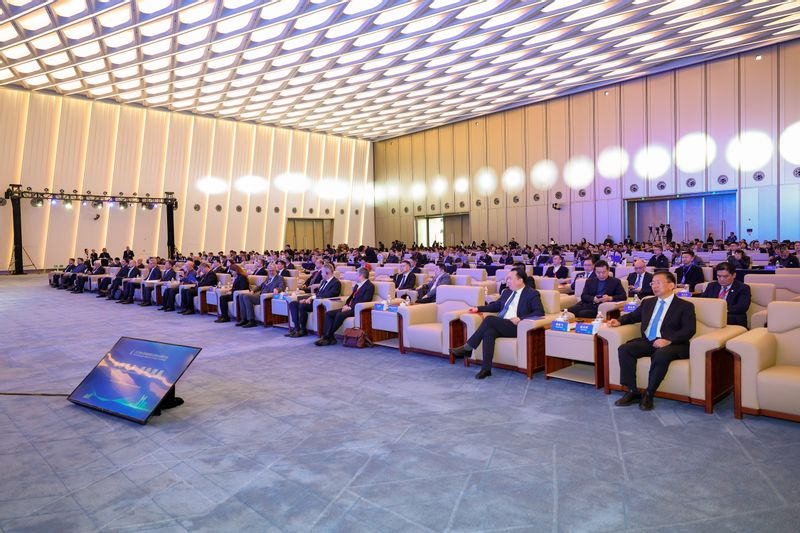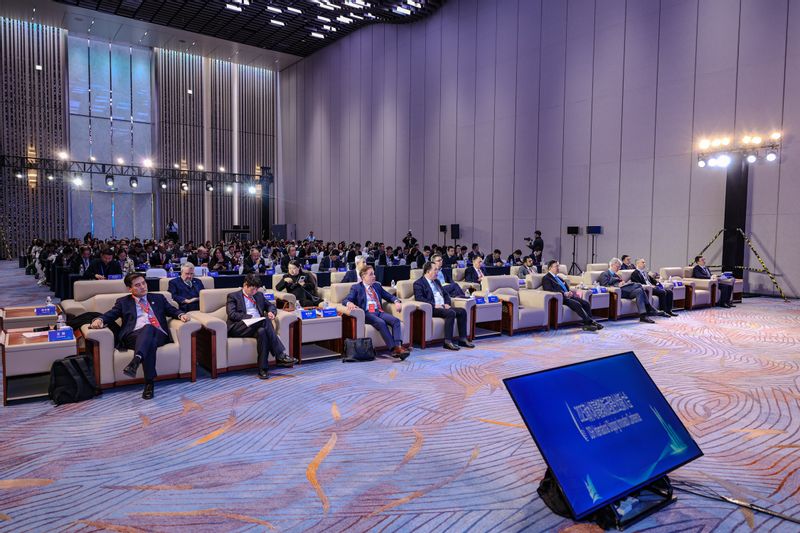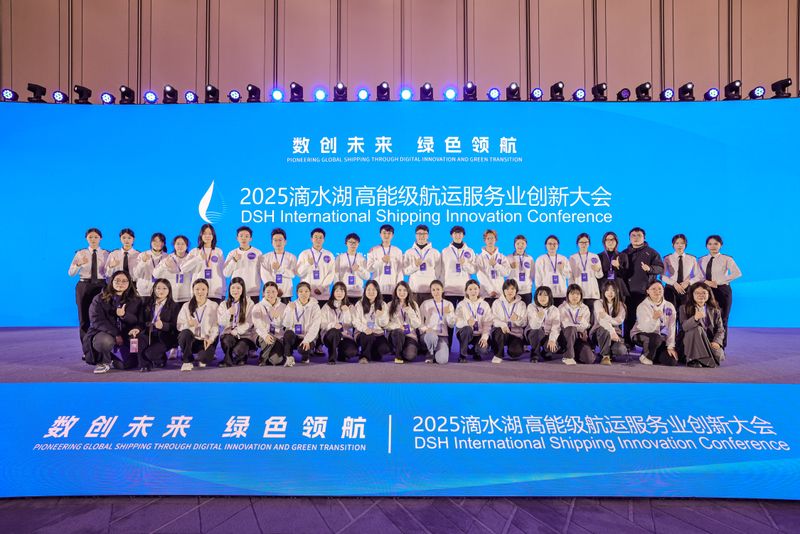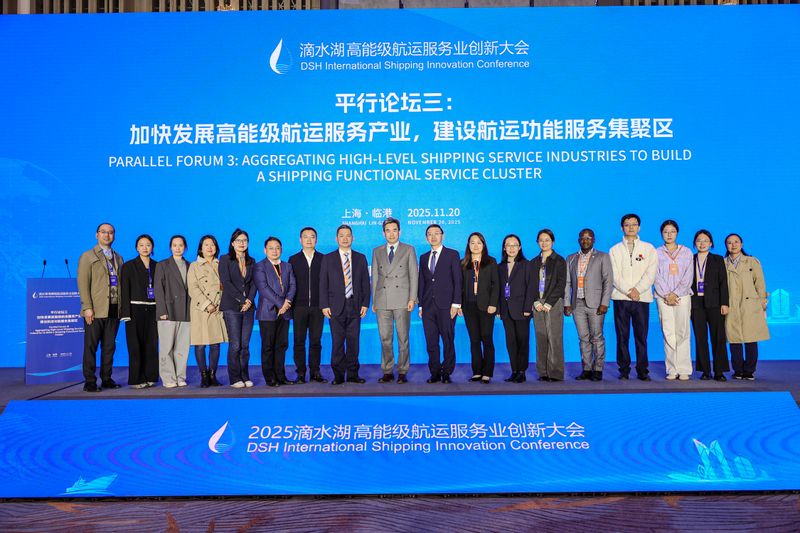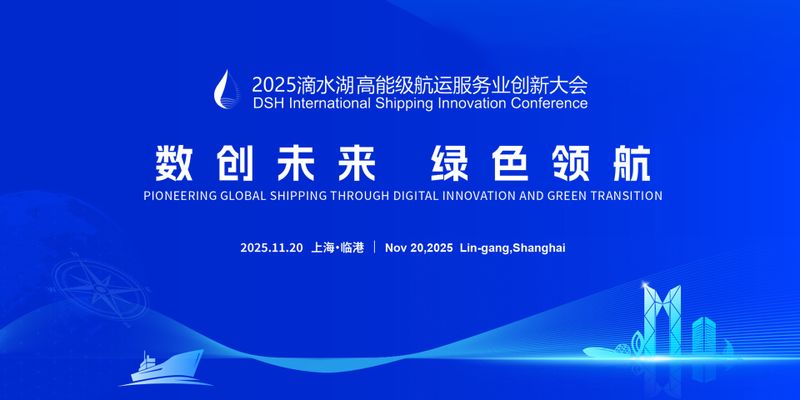
On November 20, the 2025 DSH International Shipping Innovation Conference was held at the Shanghai Lin-gang Center. With the theme "Pioneering Global Shipping through Digital Innovation and Green Transition," the conference featured one main forum and three parallel forums, covering key areas such as green and low-carbon transition, digitalization of shipping and trade, and shipping services with finance and insurance. Shanghai Maritime University (SMU) was deeply involved in the conference's preparatory work and co-hosted "Parallel Forum 3" with the Lin-gang Special Area Administration. Focusing on "Aggregating High-Level Shipping Service Industries to Build a Functional Shipping Service Cluster," Parallel Forum 3 attracted over 220 representatives from government departments, international organizations, shipping companies, and academic institutions from multiple countries and regions. Professor Ming Yin, Vice President of SMU, presided over this forum.
The main forum was co-hosted by Hao Tang, Member of the China (Shanghai) Pilot Free Trade Zone Lin-gang Special Area Party Working Committee and Deputy Director of the Lin-gang Special Area Administration, and Ming Yin, Vice President of Shanghai Maritime University. Attendees included Jinshan Chen, Member of the Standing Committee of the Shanghai Municipal Committee, Secretary of the CPC Lin-gang Special Area Working Committee, and Director of the Lin-gang Special Area Administration; Sveinung Oftedal, Chair of the IMO Intersessional Working Group-GHG and Chief Negotiator for Green Shipping at the Norwegian Ministry of Climate and Environment; Hanane Becha, Vice Chairperson of the United Nations Centre for Trade Facilitation and Electronic Business (UN/CEFACT); Vincent Clerc, CEO of A.P. Moller-Maersk A/S; Wei Li, Executive Vice President of COSCO SHIPPING; and Jan Hoffmann, Global Lead for Maritime Transport and Ports at the World Bank.
Baoru Song, Chairman of Shanghai Maritime University Council, attended Parallel Forum 1 and delivered an opening address. He pointed out that the green transition of global shipping is an irreversible trend, necessitating key breakthroughs in areas such as the construction of a green marine fuel supply system, advancements in low-carbon technology, alignment of international rules, and cultivation of professionals. He highlighted SMU's specific initiatives in frontier research on green and low-carbon shipping, participation in shipping governance negotiations, and industry-university-research collaboration. He called for consolidating efforts across the entire industrial chain to jointly advance the high-quality development of green shipping.
At Parallel Forum 3, opening remarks were delivered by Mr. Yihuai Zhao, Member of the China (Shanghai) Pilot Free Trade Zone Lin-gang Special Area Party Working Committee and Deputy Director of the Lin-gang Special Area Administration; Professor Beiping Chu, President of Shanghai Maritime University; and Mr. Guoyi Xu, Representative of the China Ports and Harbours Association.
Chu pointed out that the development of high-level shipping services urgently requires strengthening talent support and technical services. He detailed SMU's specific measures in optimizing disciplinary structures, fostering interdisciplinary education, integrating into the shipping service system, and advancing the "Cloud-based Maritime University" initiative. He called for deepening collaboration among government, industry, academia, research, and end-users to jointly support the Lin-gang Special Area in building a world-class shipping service hub, thereby empowering the construction of Shanghai as an international shipping center and the sustainable development of the global shipping industry.
During the keynote speech session, Turloch Mooney, Global Head of Port Intelligence & Analytics at S&P Global; Jan Van der Borght, Representative in China, Port of Antwerp-Bruges; Jieshu Zhang, Secretary-General of the Shanghai International Shipping Institute; Gang Wang, Deputy Managing Director of COSCO SHIPPING Seafarer Management Co., Ltd.; and Asanga Deshapriya, Director General of Merchant Shipping of Sri Lanka's Ministry of Ports and Shipping, delivered presentations on topics including container port performance, building smart port clusters, trends in the shipping industry, cultivating new types of seafarers, and maritime services in Sri Lanka.
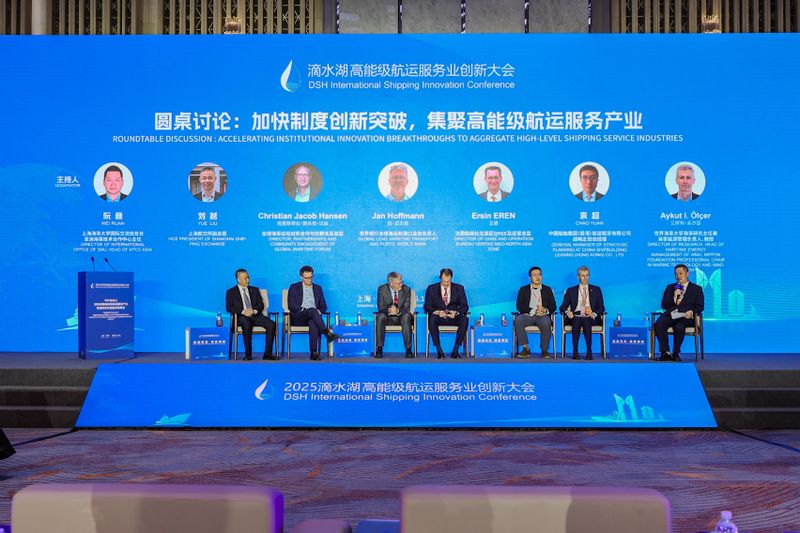
Subsequently, in the roundtable discussions, guests engaged in in-depth exchanges on two key topics, building industry consensus. Yue Liu, Vice President of the Shanghai Shipping Exchange; Christian Jacob Hansen, Director of Partnerships and Community Engagement at the Global Maritime Forum; Jan Hoffmann; Ersin EREN, Director of QHSE and Operation, North Asia Zone at Bureau Veritas M&O; and Dr. Aykut I. Ölçer, Director of Research and Head of Maritime Energy Management at the World Maritime University, discussed "Accelerating Institutional Innovation Breakthroughs to Aggregate High-Level Shipping Service Industries," sharing cutting-edge practices and insights.
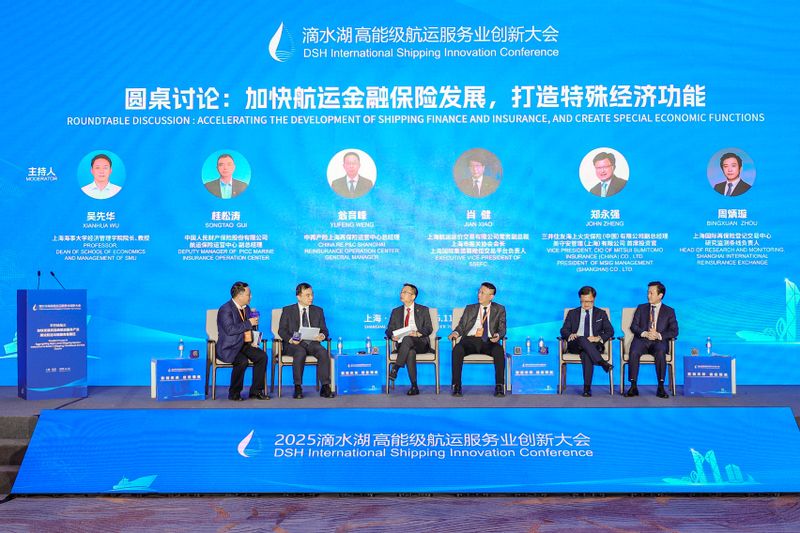
Songtao Gui, Deputy Manager of PICC Marine Insurance Operation Center; Yufeng Weng, General Manager of China Re P&C Shanghai Reinsurance Operation Center; and Jian Xiao, Executive Vice President of SSEFC, exchanged views on "Accelerating the Development of Shipping Finance and Insurance, and Create Special Economic Functions," offering suggestions to enhance the shipping finance ecosystem.
The conference injected new momentum into building a high-level shipping service cluster in the Lin-gang Special Area through policy interpretation, frontier knowledge sharing, and practical cooperation. In recent years, SMU has actively responded to the development needs of "digitalization, intellectualization, and greening" in shipping, vigorously promoting shipping's green and international transition. Concurrently, the university places great importance on deeply integrating modern artificial intelligence with maritime education, initiating the "Cloud-based Maritime University" plan. This initiative aims to build a "Shipping + Intelligence + Green" system for teaching materials, courses, and resources, promote the global sharing of maritime education resources, and create international classrooms and academic communities to cultivate high-end talent for the global maritime sector. Looking ahead, SMU will continue to leverage its disciplinary and international advantages, partnering with global stakeholders to propel shipping services towards greater specialization, digitalization, and greening, thereby contributing to the comprehensive enhancement of Shanghai's international shipping center status.