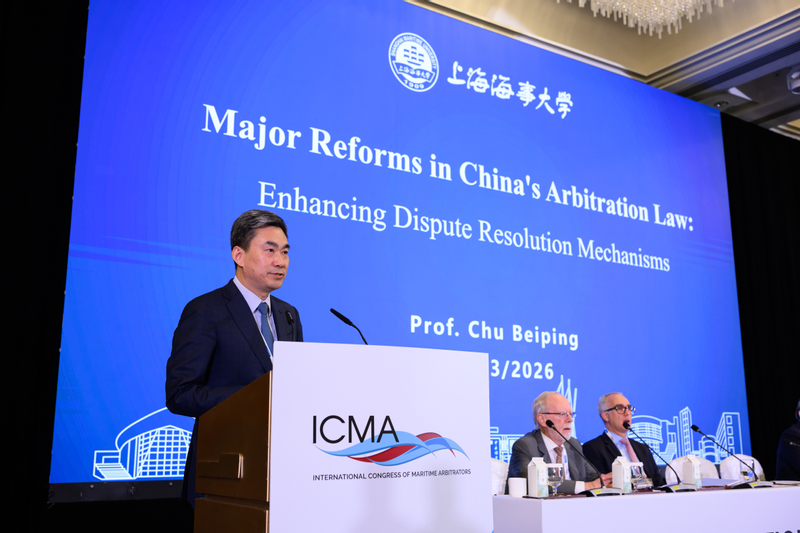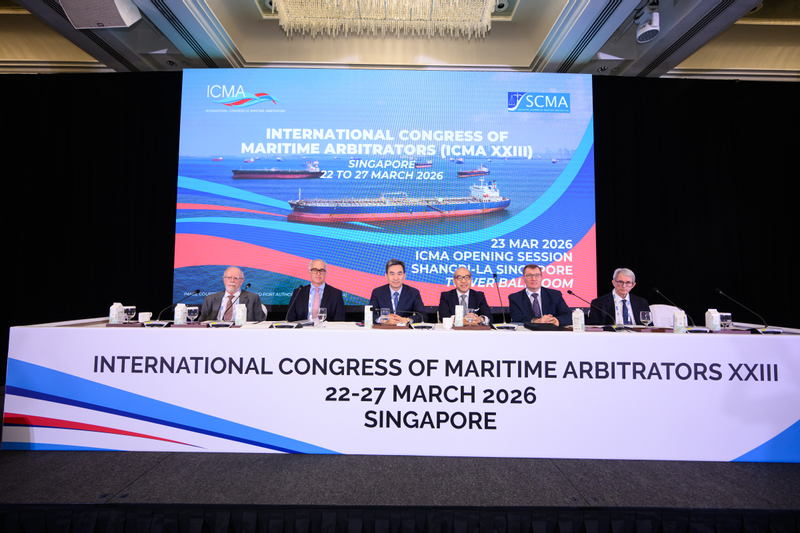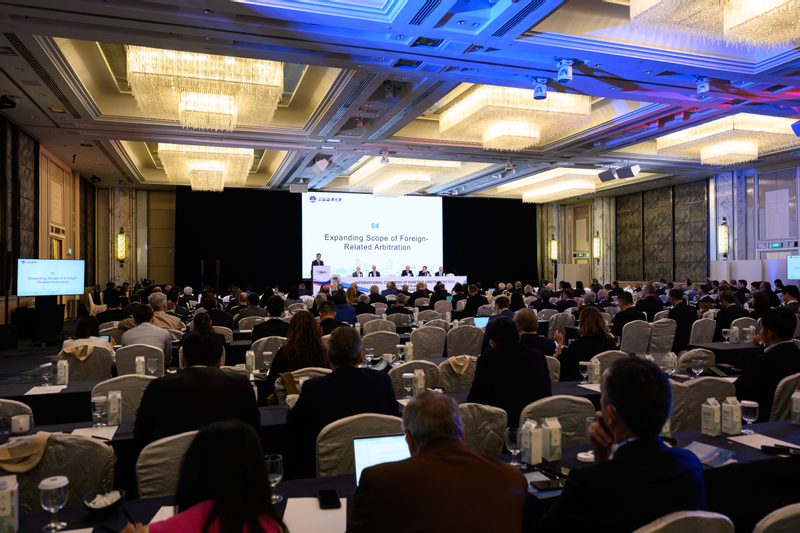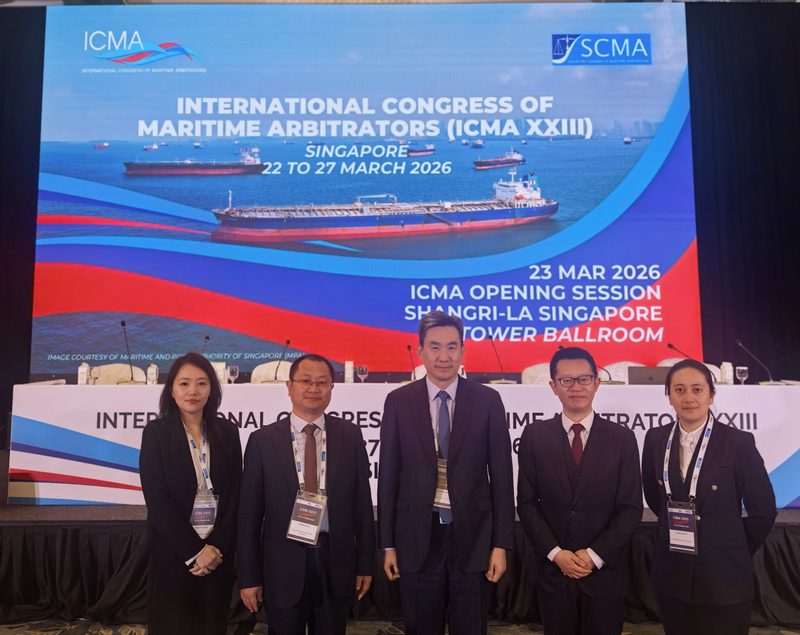
From March 22 to 27, Chu Beiping, President of Shanghai Maritime University, led a five-member delegation of faculty representatives from the School of Law to Singapore at the invitation of the organizers to attend the 23rd International Congress of Maritime Arbitrators (ICMA). During the plenary session, he delivered a keynote address. Shanghai Maritime University served as a supporting organization for the congress.
The International Congress of Maritime Arbitrators is the most authoritative and influential international academic conference in the field of maritime arbitration and is widely known as the “Olympics of global maritime arbitration.” Since its inception in 1972, the congress has been held every two to three years, providing a platform for academic discussion and professional exchange among maritime arbitrators and maritime practitioners worldwide. It is dedicated to addressing complex maritime disputes and exploring fair and efficient paths to resolution. This year’s congress was hosted by the Singapore Chamber of Maritime Arbitration (SCMA) and brought together nearly 300 maritime arbitrators, lawyers, and experts from academia and practice in the shipping sector from 36 countries and regions to discuss development trends and key issues in maritime arbitration.
The congress featured five main themes and sixteen subtopics, covering both macro-level developments in the global maritime arbitration landscape and a range of cutting-edge, high-profile, and challenging issues in the field. These included arbitrators’ disclosure obligations, the application of artificial intelligence in arbitration, alternative dispute resolution mechanisms, the recognition and enforcement of arbitral awards, electronic bills of lading, optimization of arbitral procedure, marine insurance, vessel deviation, demurrage disputes, recent developments in maritime arbitration across jurisdictions, disputes under time charterparties, bills of lading disputes, and disputes arising from the sale of goods.
At the plenary session, Chu Beiping delivered a keynote speech entitled “Major Reforms in China’s Arbitration Law: Enhancing Dispute Resolution Mechanisms.” In his speech, he systematically introduced the background to the revision of China’s new Arbitration Law and its major reform measures. He highlighted five aspects of the revision: the rules governing the validity of arbitration agreements; judicial support for arbitration in relation to interim measures and evidence; the expansion of the scope of foreign-related arbitration; the introduction of the concept of the seat of arbitration; and the legal status of ad hoc arbitration. He explained that these reforms represent China’s active efforts to enhance the international orientation, transparency, and predictability of its dispute resolution mechanisms. He noted that the new Arbitration Law creates fresh opportunities for the development of maritime arbitration and foreign-related arbitration in China, and called on participants to pay close attention to innovations and future trends in China’s maritime arbitration system after the new law takes effect. In the subsequent discussion session, he also answered questions from participants on issues including the transition from the old law to the new one.
During the congress, Chu Beiping and his delegation held in-depth exchanges with leaders of major international maritime arbitration institutions and international maritime law firms. They reached preliminary cooperation intentions on overseas internships and practical training opportunities for Shanghai Maritime University students, thereby actively expanding access to international professional experience for students. Making full use of this international platform, Chu Beiping also invited a number of world-leading experts in maritime arbitration to teach at the university. The experts showed strong interest and expressed their willingness to bring cutting-edge international case studies and front-line arbitration experience into the classroom. This will enable students to receive face-to-face guidance from top international experts without leaving China, and will help further enhance the university’s internationalized teaching standards and the quality of its practice-oriented talent cultivation.
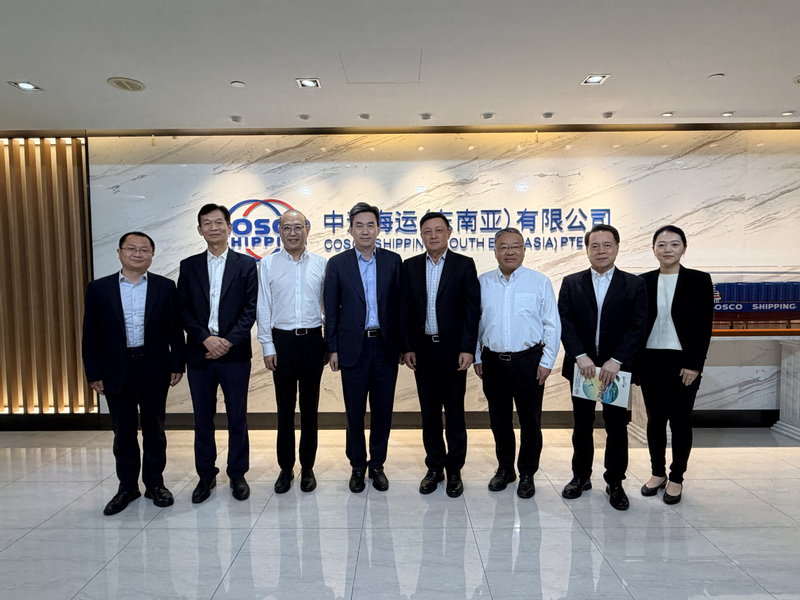
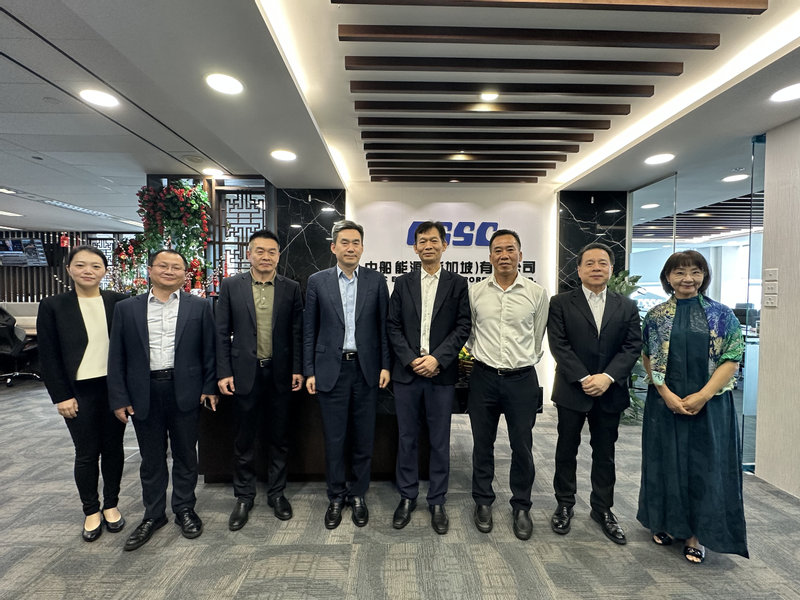
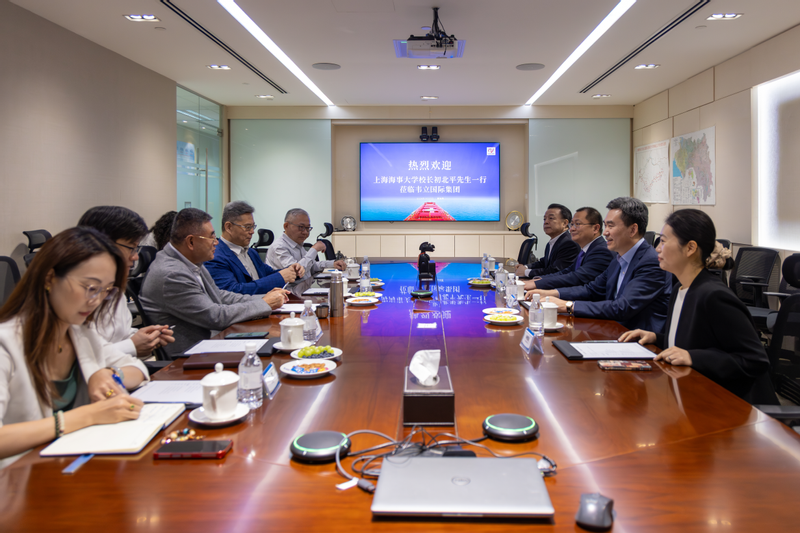
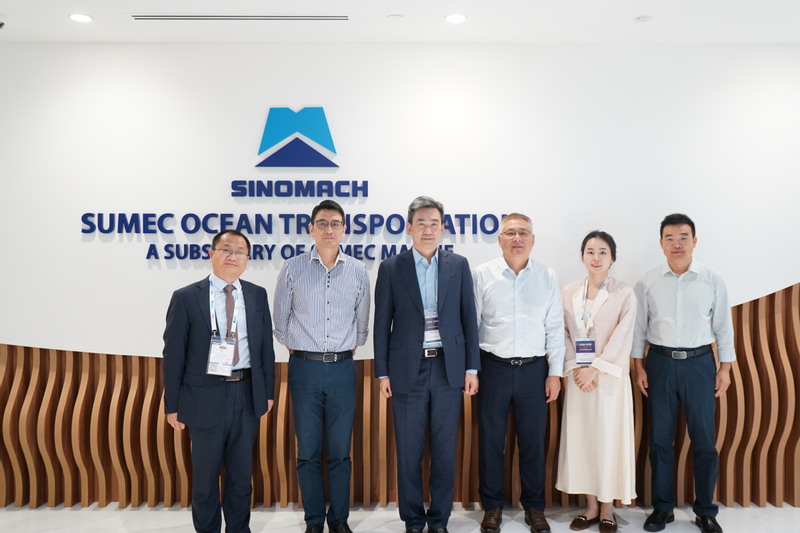
During the visit, Chu Beiping and his delegation also visited a number of shipping companies in Singapore, including Winning International Group, CSSC Energy (Singapore) Pte. Ltd., COSCO SHIPPING (South East Asia) Pte Ltd., COSCO SHIPPING International (Singapore) Co., Ltd., and SUMEC Shipping Co., Ltd. (Singapore). Representatives of the Shanghai Maritime University Singapore Alumni Association accompanied the delegation. Chu Beiping introduced the university’s recent priorities in areas such as the cultivation of professionals in foreign-related maritime rule of law, the Trusted Data Space initiative, and the Cloud Maritime University initiative. The two sides exchanged views on issues including trends in shipping development, shipping data security, security safeguards for shipping supply chains, international maritime arbitration, and dispute resolution. He expressed the hope of bringing together Singapore’s high-quality shipping resources and the strength of the alumni network to promote the cultivation of international maritime talent.
Shanghai Maritime University has a deep-rooted tradition in maritime legal education. In recent years, it has been approved as an education and training base for foreign-related legal talent at Shanghai universities and as a national-level innovative base for co-cultivating foreign-related legal talents. This academic visit is an important step in the university’s deeper implementation of its strategy for cultivating foreign-related rule of law talent. It also dovetails closely with the launch of the Program for Foreign-Related Maritime Legal Talents on March 18, injecting new international momentum into the cultivation of high-caliber foreign-related shipping legal professionals. It also marks a solid step forward in the university’s efforts to cultivate foreign-related maritime rule of law talent. Looking ahead, the university will continue to leverage its disciplinary strengths to train more high-quality foreign-related legal professionals to make greater contributions to the high-quality development of Shanghai as an international shipping center.